The 3 Samurai Rules That Make Hard Decisions Easy
Source: Presence & Path
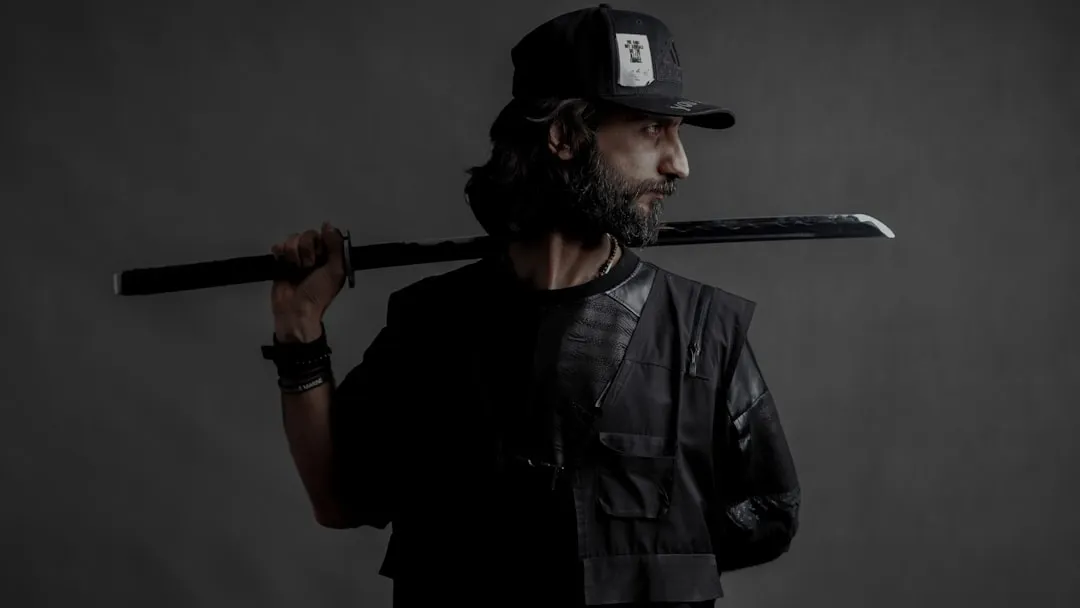
There are three rules created over 400 years ago by warriors who decided between life and death in seconds. These same three rules can transform any decision in your life into something simple, almost automatic, regardless of how difficult that decision may seem.
What I’m saying isn’t an exaggeration or a simple motivational phrase. It’s philosophy tested on the battlefield. Philosophy that still guides executives, athletes, monks, and leaders around the world today.
And when you learn these three rules, you’ll probably never suffer from indecision in the same way again.
Chapter 1: The Man Who Couldn’t Decide

Rafael’s Story
Rafael Mendez was 31 years old when he discovered he was drowning in choices. He had lived in New York for 7 years, working as a marketing analyst at a tech company in Midtown Manhattan. Reasonable salary, small apartment on the Lower East Side. He had the kind of life that seemed exactly what an immigrant should want to achieve.
But Rafael was paralyzed.
He wanted something more — to achieve more, to build a legacy, to help his family financially, to have a life he enjoyed. He didn’t just want to pay the bills and survive. And he knew that to change this reality, he needed to act. But he couldn’t.
Every morning, he woke up with the same feeling: a mental list of things he should have done, things he should have decided, and a terrible certainty that another day would pass without any of it happening.
He had started three online courses last year. He didn’t finish any of them. He had planned to change jobs. He didn’t send out a resume. He had planned to start a side consulting business. He bought a domain, created spreadsheets. He never launched it.
Rafael wasn’t lazy. That was precisely the problem. He was too intelligent. He had a high enough IQ to see all angles of any situation, and he used this ability not to make better decisions, but to justify why he hadn’t decided yet. He called this being meticulous.
The Weight of Other People’s Opinions
Rafael’s problem was deeper. He had an absolute fear of other people’s opinions. Every decision passed through an invisible filter: What will others think? Their opinions weighed more than his own will.
In the end, he preferred not to decide because not deciding meant not giving anyone a reason to judge.
But Rafael didn’t realize one thing: Indecision is also a decision. And the judgment he so feared was already happening. People were judging him precisely for being that nice, intelligent guy who never took a step.
Rafael had several lists of goals saved on his phone. The most recent one was 3 days old. The oldest was 4 years old. They were almost identical. Every night he made a list. Every morning, 40 minutes later, he had already lost momentum.
He was tired. Tired of carrying the weight of everything he hadn’t yet done.
The Pitch That Broke Everything
Two months ago, his boss had asked him to lead the presentation of an important pitch to a client in the financial sector. A six-figure contract. It was his opportunity to prove he deserved a promotion. He had 2 months to prepare.
Can you imagine what happened?
Rafael spent the first 2 weeks researching the client. The following 3 weeks thinking about the structure. In the last 3 weeks, he silently panicked. He worked through the night trying to make up for lost time, but lost time cannot be recovered. Lost time only becomes evidence.
On the day of the presentation, Rafael arrived with incomplete slides, outdated data, and a confusing structure. When the client asked three technical questions, he couldn’t answer any of them properly.
That afternoon, the boss called Rafael into his office. He didn’t yell, but he said something Rafael would never forget:
“Rafael, you’re intelligent. Maybe the most intelligent person on the team, but that’s not enough. Here in New York, there’s no reward for having ideas in your head. There’s a reward for getting the ideas out of your head. And you — you don’t get them out.”
The Turning Point at Takeru’s
Rafael left the office at 5:00 in the afternoon. He wandered aimlessly for almost 2 hours. Without realizing it, his feet had taken him to the East Village, to a narrow street where a few months earlier he had discovered a small ramen restaurant hidden between two taller buildings. The place was simply called Takeru’s.
Rafael went in without thinking. Downcast, defeated, without any idea that that dinner would be the turning point in his life.
The restaurant had 12 seats, dark wooden walls worn by years, soft yellow light, the smell of bone broth simmering for hours. And behind the counter, as always, was Takeru.
Takeru was 73 years old, small, thin, with short white hair and calm movements. He had opened the restaurant in 1978 — 47 years serving ramen, no employees. He did everything himself.
Why was he still working at 73 years old? Rafael had once asked. Takeru had replied with a smile:
“Because it’s my ikigai. My reason for getting up in the morning. Serving people with bowls that carry 47 years of practice. Why would I stop?”
That Thursday, Rafael sat on the corner bench. Takeru looked at him and noticed immediately: “You don’t seem well today, my friend.”
“Tough day, Takeru.”
The old man didn’t insist. He began to prepare a bowl. When he placed it in front of him, he stood still, his hands on the counter. “Can I tell you a story while you eat?”
Rafael nodded.
“When I was 24, I worked in an office in Tokyo. Investment banking, high salary, career on the rise. But I woke up every day feeling dead. I knew I wanted to open a restaurant, but I couldn’t decide. I thought, ‘What if it goes wrong? What if my parents judge me? What if I lose everything I’ve built?’”
Rafael stopped eating. He was listening.
“I spent years thinking. Years. Until my grandfather, who was a descendant of samurai, fell ill. He called me to talk before he died, and he told me three rules.”
Rafael asked, almost voicelessly, “What rules?”
Takeru smiled. “The three samurai rules that make any decision simple. And those three rules changed everything for me. That’s why I’ve been here for 47 years.” He paused. He looked Rafael in the eyes. “And I think maybe you need to hear about that today.”
Rule 1: Kakugo — Total Resolution
The first rule, Takeru began, is called Kakugo. In English, it would be something like total resolution. But a perfect translation doesn’t exist, because Kakugo isn’t just a word — it’s a state of mind.
Before entering any battle, the samurai did something that seems insane to us today. He accepted his own death — not in the literal sense, but in the mental sense. He would say to himself, “I am already dead. This battle is not about surviving. It’s about doing the right thing.”
Rafael frowned. “But that sounds like defeatism.”
“On the contrary — it’s total freedom. When you’re afraid of losing something, that fear distorts your decision. You don’t decide what’s right. You decide what protects what you have. But if you’ve already accepted that you can lose everything, then the fear disappears. And without fear, only one question remains: What is the right thing to do? And that question has a clear answer.”
“Are you afraid of losing your job, Rafael?”
“I am very scared.”
“So, ask yourself: What if I were fired today? What would I do? Don’t ask yourself how I would feel. What would I do? What decisions would I make tomorrow morning?”
Rafael remained silent. The answers came quickly. He would bring his side project to life. He would send resumes to the companies he truly admired. It was funny — the most difficult decisions became simple when the fear of losing what he already had disappeared.
The samurai weren’t brave because they weren’t afraid. They were brave because they had made peace with death before going into battle. And you need to make peace with loss before making any important decision in your life.
“Everything in life involves risk, and you can’t let that risk paralyze you.”
That night, instead of making another list, Rafael did something different. He took a blank sheet of paper and wrote at the top: “What if I were fired tomorrow?” And he began to list everything he would do.
When he finished, he looked at the list and realized something. Almost none of the things he would do if he were fired he was doing now while employed. Security had become his poison.
The next morning he woke up early. He opened his laptop and did one thing: He sent three resumes to three companies where he really wanted to work. He didn’t write perfect cover letters. He just sent them.
It was the first real decision he’d made in months.
Rule 2: Shichigo — Seven Breaths
A week later, Rafael returned to Takeru’s. This time the old man had invited him for tea after work on a Saturday afternoon.
“There’s more to talk about. Kakugo is only the first rule. To continue, you need the other two.”
The restaurant was closed. Takeru had placed a kettle on the stove and two ceramic cups on the counter.
“The second rule comes from a book called Hagakure. It was written in the early 1700s by a samurai who had become a monk. And in that book, there is a phrase that seems simple but is one of the most profound things ever written about decisions. The phrase says: ‘A decision should be made within the time of seven breaths.’”
“Seven breaths? Like less than a minute?”
“Exactly. Not seven days. Not seven hours. Seven breaths.”
“But Takeru, important decisions can’t be made in seven breaths.”
“Why not?”
Rafael opened his mouth to answer. He closed it. He didn’t have a good answer.
“The samurai knew something we’ve forgotten. All the information you need to make a decision is already available the moment you need to decide. The extra time you take after that doesn’t bring more clarity. It brings more noise.”
“When you need to decide something important, what is your first reaction?”
Rafael thought. “I… I feel it. Like I know if I want to or not. But then I start thinking.”
“Exactly. You know first. Then you think. And what does thinking do? It creates doubts. It considers hypothetical scenarios. It imagines other people’s opinions. And in the end, after hours, days, weeks, you make the same decision you knew from the very first second. Only now you’re exhausted.”
Prolonged indecision isn’t prudence, Rafael. It’s cowardice in disguise. It’s fear saying, wait a little longer. Gather a little more information. Maybe the right answer will appear on its own. But it never does. Because the right answer has always been with you from the beginning.
“But Takeru, what if I decide wrong? In seven breaths, I could still be wrong.”
“You can make mistakes, but you can also make mistakes after thinking about it for a week. The difference is that by deciding quickly, you make mistakes early. And when you make mistakes early, you still have time to correct them. When you make mistakes after weeks of procrastination, you no longer have time. Life has decided for you.”
That thought hit Rafael hard. How many times had he seen this happen? That partnership offer at a startup that he rejected because he kept putting off his answer. That job opening that filled up before he even decided to apply.
Time is not neutral. Time is an agent that decides for you when you don’t decide.
The modern version of this rule: You don’t literally need to count seven breaths. The principle is — set a short, absurdly short deadline.
| Decision Size | Deadline |
|---|---|
| Small | 5 minutes |
| Medium | 1 hour |
| Big | 48 hours maximum |
You decide with the information you have, not with the ideal information. Because ideal information never arrives.
“But people will say I’m impulsive.”
Takeru laughed. “People will always say something. If you decide quickly, they say you’re impulsive. If you decide slowly, they say you’re indecisive. The difference is: those who decide quickly build a life. Those who decide slowly are built by the lives of others.”
That Saturday, Rafael left the restaurant and went straight home. And he did something he’d been putting off for almost 2 years. He sat down with his girlfriend and had the conversation he knew he needed to have. It wasn’t easy. It was painful. But in 40 minutes, it was done. 40 minutes to resolve 2 years of indecision.
He slept that night with a feeling he hadn’t had in years: lightness.
Rule 3: Michi — The Way
The third meeting took place 2 weeks later. Rafael still wasn’t completely changed, but enough to start. But something was still missing. He realized something strange: Even with Kakugo, even with Shichigo, some decisions were still difficult. Because he genuinely didn’t know which path to choose.
He took these concerns to Takeru on the third Saturday of tea.
The old man listened in silence. Then he spoke:
“Rafael, the third rule is the most important. Without it, the other two don’t work properly. This rule is called Michi. In English: the way.”
“Every samurai had a Michi — a path, a code of conduct, a purpose higher than himself. And the Michi wasn’t just a pretty word. It was a practical tool because every difficult decision went through a single filter: Does this decision serve my path or not? When the code is clear, the decision is no longer yours.”
“But I don’t know which path is mine, Takeru.”
“Exactly. And that’s why you still have difficult decisions. You don’t have difficult decisions because they are complex. You have difficult decisions because you lack direction. Without direction, any direction seems as good as any other. And your mind spends hours trying to compare things that shouldn’t even be compared.”
“Want to know why high-performing executives make decisions quickly? It’s not because they’re smarter than you. It’s because they have a clear vision. They know what they’re building. And anything that doesn’t serve that purpose is discarded without hesitation.”
“How do I find my Michi?”
“You don’t discover. You decide. Michi isn’t some mystical thing you discover after meditating in a cave for 10 years. It’s a conscious choice. You sit down, think about who you want to be, what you want to build, the values you want to defend, and you write. You write your Michi. And then you use those phrases as a filter for all the decisions in your life.”
“This has been my motto for 47 years: Honoring tradition. Serving with excellence. Maintaining integrity even when no one is watching. Building something that will outlast me. Every time someone offers to buy my restaurant to expand, I look at my motto. Do you want to turn me into a franchise? No way. Decision made in 3 seconds. You see how simple it is.”
After this third concept, everything started to make more sense, as if a jigsaw puzzle had finally been assembled.
Chapter 2: The Complete Cycle
Writing the Code
That night, Rafael stayed up until 2:00 in the morning writing. He was writing his own version of himself. It was harder than he had imagined because he realized he had never really stopped to think about it. He knew what his parents wanted for him. He knew what society expected. But what did he really want?
In the end, he had four sentences:
- To build something that reflects who I am, even if it takes time.
- To be present for the people I love.
- To learn something intentionally every day.
- Not to compromise my integrity for comfort.
Four sentences. It wasn’t much, but it was everything.
The Filter in Action
In the following days, Rafael realized how that changed everything.
That freelance offer that paid well but required working with a client whose values he despised — filter: I won’t compromise my integrity for comfort. Decision: refused in 2 minutes.
The choice between two job offers: one with a higher salary but repetitive work, the other with a lower salary but projects where he could build something of his own — filter: Build something that reflects who I am. Decision: accepted the second.
The decision stopped being agonizing, not because they became easy, but because he had criteria. And criteria is what separates those who decide quickly from those who remain paralyzed forever.
The Relapse
Of course, not everything was straightforward. Three months after starting to apply the three rules, Rafael relapsed. It was a decision about returning to his country to care for his father, who had fallen ill.
His parents insisted he didn’t need to go back. And Rafael fell into the old pattern. He started researching, thinking, listing pros and cons. He spent 3 weeks paralyzed, with his father gradually getting worse.
One Thursday, he went to Takeru’s, downcast again. Takeru looked at him and said, “You forgot the three rules.”
“I haven’t forgotten. This decision is different. It’s more complex. It involves family, money, career.”
“It’s no different. You’re just scared. Apply Kakugo. Imagine the worst-case scenario. You go back to your country, lose your job, spend your savings, and your father dies anyway. That’s the worst-case scenario. But do you survive? You survive. So fear no longer has power.”
“Apply Shichigo. You already have all the information you need. Apply Michi. You wrote: Be present with the people I love. Your father is ill. There’s no difficult decision here. There’s only one decision you’re postponing.”
Rafael left the restaurant, went home, bought a ticket for 3 days later, informed his work that he would be taking a month’s leave, and did all of this in less than 2 hours.
His father recovered. Rafael stayed there for 40 days. He returned to New York renewed, and he learned something important:
The three rules don’t only work when we’re calm. They work especially when we’re about to forget all about them.
What the Research Says
A Harvard Business School researcher who studies decision-making wrote: “Most of the suffering associated with important decisions doesn’t come from the decision itself. It comes from the prolonged period of indecision.” People who decide quickly and adjust course afterward report significantly higher levels of satisfaction than people who deliberate for months before acting.
Another study published in the Journal of Personality and Social Psychology analyzed hundreds of adults who changed careers after age 30. The most striking finding: those who made the decision to change within 30 days of the first clear desire reported, 10 years later, higher levels of achievement than those who delayed the decision for more than 6 months — even when both groups ended up making the same change.
A psychologist from Stanford University puts it this way: “There is a fundamental difference between people who define themselves as thinkers and people who define themselves as doers. The human brain is malleable. You can train it to switch from one mode to another, but it requires deliberate practice in making quick decisions and enduring the discomfort of imperfection.”
The Real Impact: Small Decisions
But there’s one thing nobody talks about regarding these three rules: It’s not about big decisions.
Most people think they learn about decision-making to use in the big moments of life. And yes, the three rules apply to that too. But the real impact comes from applying them to small decisions. Hundreds of small decisions you make every day.
When you apply these rules to small decisions, three things happen:
- Your mind stops wasting energy on things that don’t deserve it.
- You develop a decision-making muscle. Every small decision made quickly is training for when a big decision comes along.
- You become a different person. You stop being someone who thinks about doing and become someone who does.
And this change in identity is what separates those who build a life from those who just watch life go by.
Chapter 3: What Rafael Learned

18 Months Later
Eighteen months after that first conversation at Takeru’s, Rafael was no longer the same man.
The side project had become a company. The new job was better. His colleagues respected him in a way they never had before.
But the real change wasn’t any of that.
The real change was that Rafael woke up in the morning without the weight of a thousand postponed decisions. That he slept without the mental noise of everything he should have done. That when someone looked at him, they saw a whole person — not a fragmented guy divided between what he was and what he said he was going to be.
He had gone to dinner at Takeru’s one Saturday. The old man served his usual bowl, sat on the stool across from him, and said, “Rafael, when was the last time you were paralyzed by an important decision?”
Rafael thought for a moment. “No. I don’t know. It’s been a while. Why?”
“Because I… I simply decide.”
Takeru smiled. “That’s a sign that the three rules have become a part of you. They’re no longer tools you use. They’ve become who you are. And when something becomes your identity, you no longer need to remember to apply it. You just live.”
The Saddest Thing About Modern Life
There’s one thing Rafael never forgot from that conversation. Takeru said:
“Do you know what the saddest thing about modern life is, Rafael? The saddest thing is that many people reach the end of their lives without having made any decisions. People were pushed by their parents, by society, by circumstances. And when they look back at the end, they ask themselves, ‘Whose life was this?’ The three rules don’t guarantee you’ll get it right, but they guarantee that the life you’ll live will be yours.”
The Three Rules: A Quick Reference
Rule 1: Kakugo — Total Resolution
Before every important decision, mentally accept the worst-case scenario. Ask yourself: “What if I lose everything? What if it all goes completely wrong?”
When you make peace with loss before deciding, fear loses its power to distort your choice. Without fear, only one question remains: What is the right thing to do? And that question always has a clear answer.
Rule 2: Shichigo — Seven Breaths
Set short deadlines for your decisions. Shorter than feels comfortable.
| Decision Size | Deadline |
|---|---|
| Small | 5 minutes |
| Medium | 1 hour |
| Big | 48 hours maximum |
Prolonged indecision is not prudence. It’s disguised cowardice. And extra time rarely brings clarity. It brings more noise.
Rule 3: Michi — The Way
Write your personal code. Three or four sentences about who you want to be, what you want to build, and the values you want to uphold. Then use those sentences as a filter for all important decisions.
When the code is clear, the decision is no longer yours. The decision belongs to the code.
Final Thought
These three rules together do something simple yet powerful: They remove the artificial weight you place on every decision. The fear of loss, the paralysis caused by time, the lack of criteria.
And when that weight disappears, deciding becomes natural — almost mechanical.
As Takeru told Rafael: The three rules don’t make the decision right. They make the decision yours.
And a life made of your own decisions is a life worth living.
What decision are you putting off right now?
Apply these three rules:
- Kakugo: What if you make the wrong decision? Will you survive? Yes, you’ll survive.
- Shichigo: Do you need more information or do you already know the answer? You already know.
- Michi: Does this decision serve the path you want to build?
In seven breaths, decide.
And remember: The real suffering in life doesn’t come from wrong decisions. It comes from postponed decisions. Because every postponed decision becomes a silent weight you carry. And when those decisions accumulate, you’re no longer living.
You’re just carrying.
The samurai knew this 400 years ago. Now you know it too.
The question is: What are you going to do with this information?