You're Trying to Be Disciplined the Wrong Way (Kaizen)

Source: Presence & Path
There’s a fact about discipline that nobody likes to hear.
Researchers at the University of Scranton studied people who make New Year’s resolutions — the most famous act of discipline in the Western world. The result? 92% of people fail.
These people don’t fail because they’re lazy. They fail because they are using the wrong system.
And what’s most fascinating is that while the Western world has been asking the wrong question for decades — “How do I motivate myself more?” — Japan has been answering a completely different question for centuries: “How do I create a system that doesn’t depend on motivation?”
There’s a Japanese philosophy called Kaizen. The word comes from two terms: kai, which means change, and zen, which means good. Continuous improvement. Constant improvement. Not 100% better tomorrow — 1% better every day.
It was this philosophy that rebuilt the entire country of Japan after World War II. It was this philosophy that transformed Toyota into one of the largest companies in the world. And it was this philosophy that would one day reach Robert, a young American of only 21 years old, in the most unexpected way possible.
Chapter 1: The Boy Who Wanted to Be Different

Robert grew up in Columbus, Ohio, son of an HVAC technician and an administrative assistant. Normal family, normal house, normal life. But since childhood, Robert had this restlessness inside him — this feeling that he was capable of more, that he could be more.
In high school, he tried out for the basketball team. Cut after the first selection. He tried to run for student council. Lost the election. He tried to date the girl he’d liked since eighth grade. She said no.
Each rejection was another brick in the wall he was building between himself and his dreams. And when you build enough wall, you stop trying to climb. You start to stay on the inside.
In college, he studied software engineering at a state university in Columbus. It wasn’t the Ivy League of his dreams — it was what he could get. But he was there. And at 21, in his sophomore year of college, he made a decision.
Enough of being the observer. Enough of being the guy who tries and fails. He was going to transform. He was going to become disciplined, productive, focused. He was going to be the guy who wakes up early, trains, studies, builds. He was going to become the version of himself he always dreamed of being.
And that’s when Robert made the mistake that almost everyone makes: He tried to change everything at once.
The plan was ambitious:
- Wake up at 5:00 a.m. every day
- Gym in the morning
- Classes during the day
- Study for another 3 hours at night
- Read for 30 minutes before bed
- No fast food
- No social media for more than an hour a day
- No Netflix during the week
He even created a spreadsheet — colorful, organized, with schedules for each activity, weekly goals, progress indicators. It was the spreadsheet of an engineer trying to solve a human problem with machine logic.
In the first week, he went to the gym on Monday, Tuesday, and Wednesday. He ate chicken and rice for lunch and dinner. He read two chapters of a book on productivity. He studied for the planned 3 hours. He felt invincible.
On Thursday, he had an important exam. He stayed up late studying. On Friday, he woke up at 7:00 a.m. because the 5:00 a.m. alarm didn’t get him out of bed. He missed his workout. He was exhausted. At lunchtime, with no time to prepare food, he went to a fast food restaurant because it was the only option.
“Okay, I missed a day. I’ll get back to it on Saturday.”
On Saturday, a friend invited him over to play video games. He went. “Just an hour.” He stayed for 4 hours. He didn’t study. He didn’t work out. He ate pizza.
Sunday was the day to catch up. Gym, studying, reading, all in one day. It lasted until noon. Then he gave up.
The following Monday, he looked at the colorful spreadsheet. He saw that he had failed at practically everything in the second week. And he did what the human brain does when it processes repeated failure: He came up with an explanation.
“Maybe I’m just not a disciplined person. Maybe it’s genetic. Maybe my brain doesn’t work that way.”
And it was at that moment that Robert began to construct a false identity for himself. An identity of defeat. And false identities are the most dangerous because the more you repeat them, the more real those identities become.
Chapter 2: The Encounter
After 3 months of trial and error, Robert sat in the college library at 11:00 a.m. on a Wednesday, staring at his computer screen, unable to type a single line of the assignment he needed to hand in. At the same time, he was supposed to be at the gym. At the same time, he should have been studying for Thursday’s test.
He stared at the screen for about 20 minutes. Then he closed the computer and left.
As he was leaving the library, he bumped into a professor — Professor Daniel Okafor from the computer science department, a Nigerian-American of about 55 years old with graying hair at the temples, a relaxed manner as if he were in no hurry for anything.
“Robert, you were in my algorithms class last semester, weren’t you?”
“Yeah, Professor Okafor.”
The professor looked at him for a second. It wasn’t a judgmental look. It was a look that saw.
“Are you well?”
Robert was going to say yes. He was going to say that everything was great, that everything was fine, that there was nothing wrong. But something else came out.
“Honestly, no. I’m trying to get organized, be disciplined, change my life, and I’m failing at everything. Every week I start over, and every week I stop. I don’t know what’s wrong with me.”
Professor Okafor was silent for a moment. Then he said something Robert didn’t expect: “Do you have about 20 minutes?”
They went to the cafeteria. The professor ordered a coffee. Robert ordered water because he was embarrassed to spend money in front of the professor.
“Tell me about this system you’re trying to implement,” said Professor Okafor.
Robert explained everything — the spreadsheet, the schedules, the objectives, the repeated failures. The professor listened to everything without interrupting.
When Robert finished, the professor asked a strange question: “Robert, do you know how elite athlete training works?”
“Gym, diet, discipline.”
“No. I’m not talking about what they do. I’m asking how they get there.”
Robert didn’t understand the difference. The professor continued:
“Before becoming an elite athlete, a person starts by running 1 km a day. Not 10 km, not a marathon — 1 km. For days, sometimes weeks, just 1 km. The body adapts. The muscles get stronger. The heart gets conditioned. And then, gradually, almost imperceptibly, this person increases: 1.2 km, then 1.5 km, then 2 km. And one day, this person runs a marathon. Not because they decided to run a marathon — because they built a system that made the marathon possible.”
“Okay, but this is sports. I’m trying to change mental habits.”
“It’s exactly the same principle. Do you know where the word Kaizen comes from?”
Robert didn’t know.
Chapter 3: The Philosophy That Rebuilt a Country

Professor Okafor leaned back in his chair.
“After World War II, Japan was devastated — economically, infrastructurally, psychologically devastated. They needed to rebuild an entire country, and they had two choices.
The first choice was to try to do everything at once. Build enormous factories, implement complex systems, train the entire workforce simultaneously. Go from zero to 100 in a gigantic recovery attempt.
The second choice was different. It was about doing one small thing better each day. Identifying a problem, improving that problem by 1%, solving the next one. A continuous, gradual, constant process of improvement.
They chose the second path. They called it Kaizen.”
Robert was listening attentively now. “And the result?”
“In less than 40 years, Japan went from a ruined country to the second largest economy in the world. Toyota became one of the most efficient companies on the planet using this same principle in its production lines. 1% improvement per day, every day, non-stop.”
“But Professor, 1% per day seems very little.”
“It seems so, until you calculate what 1% per day does in a year.”
The teacher took a napkin and wrote a number on it.
“If you improve 1% per day for 365 days, you don’t improve 365% — you improve 3,778%. That’s exponential math. The magic that doesn’t seem like magic until you look back and no longer recognize who you were.”
Silence.
“Your problem, Robert, isn’t a lack of discipline. It’s that you’re trying to climb the mountain all at once. You’re trying to go from zero to 100 in a week. And when you fail — because anyone would fail — you interpret it as personal weakness. When in reality, it’s just the predictable result of an impossible system.”
Robert stared at the number on the napkin: 3,778%.
“So, what do I do?”
“Meet me here at the same time next week and bring something I’m going to ask you to do.”
“What?”
“The smallest change you think you can maintain for 7 days in a row. The most ridiculously small one. Think about it during the week.”
That week, Robert kept thinking about what the professor had said. The smallest change you can maintain for seven consecutive days. His first mental response was the gym. Then it was studying more. Then it was going to bed earlier. But all of those seemed too big. They had all failed before.
Then he started slowing down. Slowing down. Slowing down. Until it became something so small it seemed ridiculous:
Every day, before opening his cell phone in the morning, he would sit on the edge of the bed for 2 minutes doing nothing.
Just sitting. 2 minutes.
When he arrived to see Professor Okafor the following week with that answer, he expected the professor to say it was too small.
The professor smiled. “Perfect.”
“Is that all? Sitting on the edge of the bed?”
“Just this for 1 week. Nothing more. Don’t add anything else. Don’t try to include meditation, exercise, reading. Just sit. 2 minutes every day.”
“But Professor, this won’t change anything.”
“One thing will change. The only thing that matters now.”
“What?”
“It will prove to you that you can keep a promise to yourself.”
Chapter 4: What Neuroscience Knows That You Don’t
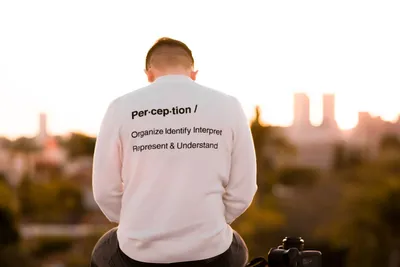
“Professor, but how can something so small really change anything?”
Professor Okafor was a scientist. He loved that question.
“Let me explain what happens in your brain when you try to change everything at once.”
He explained about the prefrontal cortex — the part of the brain responsible for self-control, decision-making, and planning. It’s the region you use when you resist temptation, when you choose to study instead of playing, when you decide to go to the gym.
“The problem: this region consumes energy. A lot of it. And there’s a daily limit to that. Every decision you consciously have to force drains that resource. When you create a system with 12 simultaneous changes, you’re asking your prefrontal cortex to work at maximum capacity from the moment you wake up. Half a day later, it’s exhausted. And then you give in. Not because you’re weak. Because you’re biologically exhausted.”
Robert was processing this. “But is there a way out?”
“The basal ganglia,” said the professor. “It’s the oldest part of the brain, responsible for automatic behaviors, habits, routines, patterns. When a behavior is repeated enough times, it migrates from the prefrontal cortex to the basal ganglia. It becomes automatic. And then it no longer costs energy. It no longer requires a decision. It simply happens.
And that’s exactly what Kaizen does,” the professor continued. “It introduces such small changes that the prefrontal cortex hardly has to work. No resistance. No alarm. The brain sees no threat. And after weeks, that microscopic behavior has migrated to the basal ganglia. Now you have an automatic habit. And then you add the next step.
It’s like hacking your own nervous system.”
“Exactly. The Japanese arrived at this conclusion through centuries of observation. Modern neuroscience has confirmed the mechanism behind it. It’s the same idea in different languages.”
In the following weeks, Professor Okafor added one layer at a time.
After 2 minutes by the bedside came the second step: Before turning on his computer to study, Robert would write three words in a notebook. Just three words describing how he was feeling at that moment. Angry, tired, focused, anxious. Anything. Three words.
“This seems pointless,” said Robert.
“You said the same thing about sitting on the bed for 2 minutes. Do that for another 7 days.”
One week later, something strange happened. Writing those three words every day had begun to create an awareness that Robert didn’t have before. He was noticing patterns.
On the days he wrote “anxious” or “resistant,” he procrastinated the most. On the days he wrote “curious” or “light,” he studied better and absorbed more.
“Professor, I realized something. On the days I wake up and spend half an hour on my phone before doing anything else, when I go to write down those three words, words like scattered, heavy, and unmotivated usually come to mind. But on the days I sit for 2 minutes first and only then pick up my phone, the words are different. Lighter, present, and ready.”
Professor Okafor did not say “I told you.” He didn’t bother to prove he was right. He just asked, “And what do you think that means?”
“The fact that my cell phone is putting me in a mental state in the morning is ruining the rest of my day.”
“What do you want to do with it?”
Robert thought. “I want to try going without my cell phone for the first hour after waking up. For 2 weeks.”
The professor raised an eyebrow. “You arrived at this conclusion on your own, based on data you collected yourself. This is pure Kaizen. It’s not a rule imposed from the outside. It’s an improvement that you yourself identified, understood, and decided to implement.”
And that’s when Robert began to understand the difference:
Discipline from the outside in breaks. Discipline from the inside out builds.
Chapter 5: The Identity You Build or Destroy

Two months after his first meeting with the professor, Robert was different. Not radically different. Not in a way that others would immediately notice. But different in a way that he felt inside.
He would wake up and sit for 2 minutes before anything else. He would write the three words in his notebook. He would go the first hour without his cell phone. He had added another step: Before starting to study, he would organize his desk for 2 minutes. Just 2 minutes. He would remove what he didn’t need, leaving only what he was going to use.
These are four habits. Four small things. That together took less than 15 minutes a day.
But something bigger was happening that wasn’t visible in the actions. It was happening within the narrative Robert had about himself.
Before, when someone asked him how he was doing in college, he would say, “Going. It could be better. I’m a bit disorganized.” It was an identity. A story he told himself and others.
Two months later, he gave a different answer to the same question from a classmate: “I’m fine. I’m building some routines.”
Building routines. No “trying to be more disciplined.” No “trying to get organized.” Building. It was a verb of agency. Of process. Of someone who is in the middle of a construction. Not trying to start one that never takes off.
Professor Okafor noticed this change before Robert did. “So you’re starting to see yourself differently,” the professor said in one of their sessions.
“Like this?”
“The language you use to describe yourself has changed. Before, you spoke of yourself as someone trying to change. Now you speak of yourself as someone who is changing. It’s a small difference in vocabulary. It’s a huge difference in identity.”
Robert processed this.
“James Clear, who wrote one of the most important books on habit formation in recent years, makes a distinction that I have always considered brilliant,” said the professor. “He distinguishes three types of change: outcome change, process change, and identity change.
Most people try to change for the outcome. ‘I want to lose 10 kilos.’ ‘I want to get an A on the test.’
The deepest level is identity. Not ‘I want to exercise.’ But ‘I am someone who moves every day.’ Not ‘I want to study more.’ But ‘I am someone who studies.’
When identity changes, behaviors flow naturally. Because you’re not doing something difficult. You’re being who you are.”
“And how do you change your identity?”
“Exactly as you’re doing. With evidence. Every time you do those 2 minutes by the bedside, you vote for the identity of someone who respects their own mind. Every time you write those three words, you vote for the identity of someone who is self-aware. Every small action is a vote. And over time, the votes accumulate and the narrative changes.”
In the fourth month, the first real test came. Robert had final exams, a chaotic week, little sleep, poor eating, stressed. And on the most difficult day — a Wednesday that started at 7:00 a.m. and ended at 2:00 a.m. the following morning — he completely forgot to do his routines.
He didn’t do the two minutes. He didn’t write the three words. He wasn’t without his cell phone in the morning. Nothing.
The next morning, he woke with that familiar feeling. The sense that he had failed. The urge to think, “Since I broke the sequence, it’s no use anymore.”
He stared at the ceiling for about 10 minutes. Then he sat on the edge of the bed for 2 minutes. He opened the notebook. He wrote three words: “Relieved, present, starting over.”
He hadn’t given up. He had stumbled. And he understood the difference now.
That same day, he sent a message to Professor Okafor telling him what had happened. The professor’s response came within a few minutes: “That’s exactly wabi-sabi.”
Robert didn’t know the term. He looked it up.
Wabi-sabi is a Japanese philosophy that celebrates imperfection and impermanence. The idea that nothing is permanent, nothing is perfect, and that true beauty exists in imperfection — not despite it, but within it.
“One imperfect day doesn’t ruin a journey,” the professor wrote. “It only destroys those who believe that perfection is the goal. The real goal is consistency, and consistency doesn’t mean doing it every single day without exception. It means always returning — without drama, without punishment, without an identity crisis. You stumbled. You returned. That’s real consistency.”
Robert kept that message.
Chapter 6: When the System Meets the Real World

In the fifth month, a friend of Robert’s named Marcus invited the whole group for a week-long party. It was summer. He was between semesters, and the logic was the same as always: “You’re only young once.”
Robert left. He slept badly. He drank more than he should have. He ate whatever was available. He stayed up until 4:00 a.m. every day.
And when he returned, he expected the same old spiral. The feeling of having thrown away everything he had built.
But something different happened.
On his first day back, he woke up and automatically sat on the edge of the bed for 2 minutes. Without thinking, without deciding — he just did it. He stood there, surprised at himself.
“For the first time in my life, a healthy behavior had occurred on autopilot. It didn’t require willpower. It didn’t require motivation. It simply happened because it was now sufficiently ingrained in my basal ganglia. It had migrated from conscious effort to automatic behavior. This was Kaizen working at the deepest level.”
When he told Professor Okafor, the professor said something that stayed etched in Robert’s memory for years:
“Robert, you’ve just crossed a line that most people never cross. You stopped trying to be disciplined. You started being disciplined. It’s no longer a goal. It’s who you are.”
In the sixth month, Robert went ahead and added what he had resisted for months: the gym.
Not five times a week. Not an hour of intense training. Not a complete physical transformation.
Gym three times a week for 20 minutes. One day focused on pushing, another day focused on pulling, and the other day focused on legs. No specific program, no weight or rep goals. Just show up and move your body for 20 minutes, three times a week.
“That’s not enough to transform me physically,” he told the professor.
“It’s not about physical transformation yet. It’s about creating the habit of showing up. Once showing up becomes automatic, you’ll naturally want to do it more because your body will ask for it. But first, presence needs to be automatic.”
Two weeks later, Robert was at the gym on a Thursday and realized he’d been there for 45 minutes without noticing.
“Because I was engaged, curious, immersed in the process.”
Professor Okafor had a name for that, too: Flow. A state of flow. When challenge and ability are aligned, the brain enters a state of total absorption. You don’t achieve this state by forcing it. You achieve it by gradually building it up until your level of competence allows for the level of challenge.
Six months ago, Robert had zero consecutive days in anything. Now he had habits that ran on autopilot, an identity under construction, and for the first time in his life, he wasn’t fighting against himself. He was working with himself.
Chapter 7: What the Experts Know

A human behavior researcher from Duke University published a study showing that approximately 43% of people’s daily behaviors are not conscious decisions. They are automatic habits triggered by environmental cues.
Almost half of what you do today, you didn’t decide to do. It simply happened because the environment and the neural pattern were aligned.
Her conclusion is both disturbing and liberating at the same time:
If you want to change long-term behavior, changing motivation is the least efficient strategy. Redesigning the environment and creating automatic habits is what really works.
A neuroscientist who studies synaptic consolidation and habit formation explained something at a conference that Robert would have loved to hear 2 years earlier:
“The human brain resists drastic changes because it interprets them as a threat to the established equilibrium. But incremental changes below a certain threshold of perception don’t trigger that alarm. You can literally reprogram the brain by going under the radar of the resistance system.”
And there’s a piece of data from the field of positive psychology that Professor Okafor shared with Robert months later:
In studies on long-term self-discipline, the people who maintain consistency the longest aren’t necessarily the most motivated or those who try the hardest. They are the ones who have created environments and systems that make the desired behavior the path of least resistance.
Real discipline isn’t about doing difficult things by force. It’s about building systems where doing the right thing is easier than not doing it.
Chapter 8: The Hidden Trigger
But here’s the part that Robert only understood at the end of the first year. And that completely changes your understanding of everything you’ve heard so far.
For months, Robert had been building habits, improving processes, creating systems. And it was working. But there was a component working silently, invisibly, that was the real fuel for everything.
It was in a conversation with Professor Okafor near the end of the year that this came to light.
“Robert, ask me a question.”
“Why do you want to be disciplined?”
Robert thought the answer was obvious. To perform better in college, to feel good, to build a career.
“No, it goes deeper than that. Why do these things matter to you?”
Robert stopped. He remained silent for a long time.
“I grew up watching my father work more than 12 hours a day in a profession he didn’t choose. He had no options. He did what he could. And I’ve always been afraid of turning 45 and looking back and seeing that I did what I could. I want to have options. I want to choose. I want the life I have to be the result of choices, not circumstances.”
Silence.
“This is what the Japanese call ikigai,” said the professor. “The reason for being, the purpose that goes beyond the immediate goal. You don’t want to get A’s on tests. You want to build freedom. Discipline is not the goal. It’s the path to what truly matters to you.
And do you know what happens when you connect habits to ikigai? Motivation changes in nature. Before, it was extrinsic motivation: ‘I must do this because it’s good for me.’ After connecting it to purpose, it becomes intrinsic motivation: ‘I do this because it’s who I am and because it leads me to where I need to go.’
Extrinsic motivation runs out. Intrinsic motivation doesn’t.”
Robert stood gazing out the window of the college hallway. Outside, students passed by. Some in a hurry, some distracted, some with that lost look he recognized so well. The look of someone who doesn’t know why they are where they are.
He no longer had that look.
By the end of the first year, Robert had changed in ways that were difficult to quantify. His grades had improved, not dramatically, but consistently. Where he used to get C’s, he started getting B’s. Where he used to get B’s, he got A’s. Not because he was smarter, but because he studied more consistently.
His body had changed, not radically, but there was more energy, less mental fog in the morning. He slept better because he woke up better because the start of the day was more structured.
But the biggest change was something else. It was inner silence.
Before, there was a constant background noise in Robert’s head. A voice that always said: “You should be doing more. You’re wasting your potential. You’re disorganized. You’ll never succeed.” It was a noise he no longer even noticed because he had lived with it forever.
That noise had become quieter. It hadn’t disappeared completely. Perhaps it never would. But it was quieter because there was concrete evidence accumulated day by day that he was succeeding. That he was fulfilling what he promised himself. That each small day was building something real.
At the last meeting of the year with Professor Okafor, the professor asked, “What did you learn this year?”
Robert thought for a long moment.
“I learned that discipline isn’t about strength. It’s about design. It’s not about waking up every day and deciding to be a better person. It’s about building a system where being a better person is the path of least resistance.”
The professor nodded.
“And I learned that identity comes before behavior. I can’t act outside of what I believe myself to be. So, before changing what I do, I need to change who I think I am.”
“More.”
“And I learned that imperfection is not failure. It’s part of the process. The point isn’t never to fall. It’s how many times you get back up.”
Professor Okafor was silent for a moment. “You just described Kaizen, Ikigai, and Wabi-sabi in three sentences — without knowing their names.”
Chapter 9: The Legacy of a Year
Two years after that first encounter outside the library, Robert was in his final year of college. He was interning at a tech company in Columbus. It wasn’t the most famous company in the world, but it was a place where he was hired because his portfolio showed consistency, not sudden brilliance.
Consistency.
In one of the team meetings, the manager, a guy named David, asked each intern to present a personal project they were developing. When it was Robert’s turn, he presented a small application he had built over eight months. It wasn’t revolutionary, but it was complete. It worked. And it had been built in pieces, one feature at a time, during eight months of consistent work.
After the meeting, David called Robert aside.
“You built this all by yourself in eight months while you were in college?”
“I try.”
“Most interns show me ideas. You showed me something real. How did you do that?”
Robert thought about the right answer for a second.
“One day at a time.”
David didn’t fully understand, but Robert did. It was the most honest and complete answer he could give. Because there was no secret. There was no trick. There was no productivity hack or revolutionary technique.
There was a simple system built on a simple principle: Kaizen. 1% better every day.
And at the end of eight months, there was a real application where before there was only an idea.
The Challenge
So, let me ask you a direct question: How many times have you tried to change and failed?
Not because you didn’t truly want to change. Not because you were weak. But because the system was wrong from the start.
You went from zero to 100 in a week. You created an impossible list of habits. You demanded perfection from a brain that doesn’t work that way. And when you failed — as anyone would — you turned the system’s failure into evidence of your own personal failure.
This needs to stop.
Because what Robert discovered, what the Japanese applied, and what neuroscience confirmed, is that true discipline isn’t about trying harder. It’s about trying differently.
Quick Recap of What We Learned Today
| Principle | Key Insight |
|---|---|
| Kaizen | You don’t need to be perfect tomorrow. You need to be 1% better today. Microscopic changes don’t trigger the brain’s resistance alarm. These changes accumulate exponentially — a year of 1% per day is worth 3,778% improvement. |
| Neuroscience | Willpower is a limited resource that eventually runs out. But repeated behaviors migrate from conscious effort to automatic. When the habit is in the basal ganglia, it no longer requires a decision. It just happens. |
| James Clear | Lasting change begins with identity — not with the result, not with the process. With identity. You don’t try to exercise. You are someone who moves every day. The difference is enormous. |
| Wabi-sabi | Imperfection is part of the process, not the end of it. The point is not to never fall. It’s how many times you return. Consistency is not perfection. It’s constant return. |
| Ikigai | Discipline without purpose is torture. When you connect habits to what truly matters to you, motivation changes its nature. It ceases to be something you need to create every day. It becomes something that is there because the reason is there. |
Now, the challenge — and I’m not asking you to transform your life this week. I’m asking you to do one thing.
The smallest change you can maintain for seven days in a row.
It could be meditating for two minutes. Drinking a glass of water in the morning when you wake up. Walking around the block every day. Reading a page of a book a day. Anything. But it has to be sustainable. You have to be real.
Do this for seven days without adding anything else, without speeding it up — just that one thing. And when you reach the seventh day, you will have proven something to yourself.
Not that you can transform your life in a week. But that you can keep a promise.
And that proof is the most important brick in any construction.
Time will pass anyway. In a year, you will have done 365 days of 1%, or you will have done 365 days of zero. The choice isn’t in the week you’ll completely transform yourself. It’s in the next second, in that small thing you know you can do.
Robert didn’t wake up different one day. He woke up the same day after day, doing one small thing. And one day he looked back and didn’t recognize who he had been.
You can do the same.