The Samurai's Secret to Effortless Self-Control
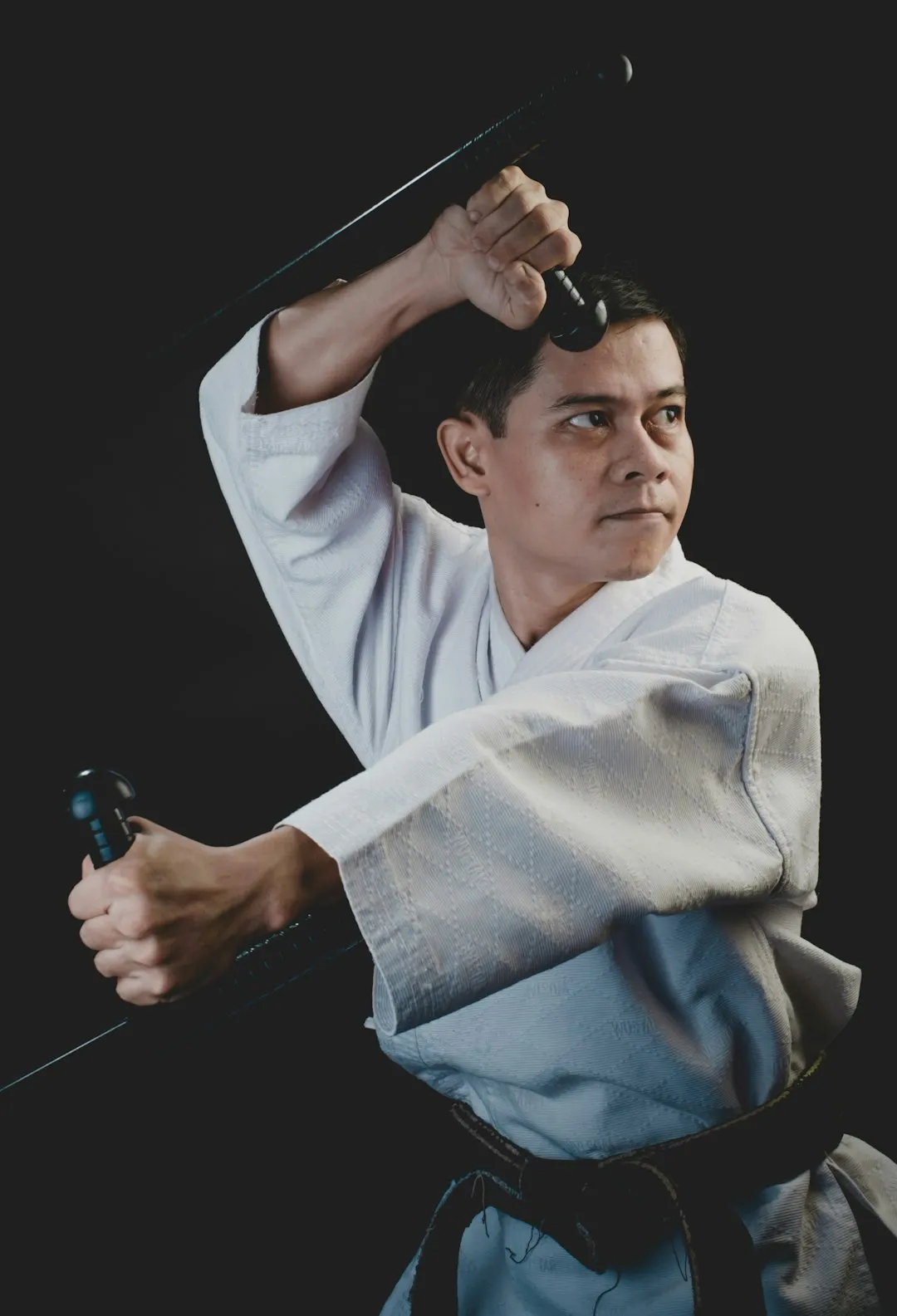
Source: Miyamoto Musashi Method
Introduction: You’re Not Weak, You’re Depleted
There’s a biological reason why your self-control collapses after resisting temptation all day. And it has nothing to do with weak character or lack of discipline.
You’re operating under a fundamental misunderstanding.
Self-control is not a personality trait. It’s a depletable resource.
Every resistance to temptation, every disciplined choice, every moment of restraint consumes from the same limited willpower pool. By evening, the pool is depleted — making resistance nearly impossible regardless of how strong your morning discipline was.
This is why:
- You maintain a perfect diet all day, then demolish an entire bag of chips at night
- You work with focus all morning, then scroll mindlessly all evening
- You’re a disciplined person until you’re suddenly not
You’re not weak. You’re depleted.
The Japanese Alternative
Japanese culture developed something Western approaches miss entirely: self-control through eliminated temptation rather than increased resistance.
Not building stronger willpower — engineering your environment and cognitive patterns so temptation becomes irrelevant.
In the next 30 minutes, I’m showing you seven specific Japanese habits that make self-control 10 times easier. Not through superhuman discipline, but through systematic architecture that eliminates the willpower requirement entirely.
These practices are based on principles like harahachi buu, wabi sabi, kaizen, and enso — creating automatic self-control through environmental and psychological design.
Chapter 1: Harahachi Buu — Stop at 80% Fullness

The Practice of Voluntary Cessation
Harahachi buu is an Okinawan practice meaning “eat until 80% full.”
It’s a Confucian teaching advising people to leave the dining table before completely satisfied. Okinawa has the world’s highest concentration of centenarians — with this practice cited as a key longevity factor alongside other dietary patterns.
This isn’t primarily about caloric restriction, though benefits exist. This is systematic self-control training.
Every meal becomes a practice session for voluntary cessation before the biological satiation signal arrives. You’re training the exact skill required for all self-control applications: stopping before satisfaction.
Most self-control failures occur because people wait until the craving overwhelms their resistance. Harahachi buu teaches stopping before the overwhelming urge arrives.
| Domain | Application |
|---|---|
| Eating | Stop before fullness |
| Entertainment | Stop before exhaustion |
| Any pleasure | Stop while still enjoying — creating practice in voluntary cessation |
Implementation
- At every meal, estimate 80% fullness and stop eating there
- This requires conscious attention — put your fork down and assess hunger levels
- Stop when satisfied but not full
- The first week feels unsatisfying
- After 2 weeks, you’ll notice afternoon energy improves (no food coma from overeating)
- After 30 days, stopping at 80% becomes automatic — and transferable to other domains
Chapter 2: Wabi Sabi — Find Beauty in Imperfection

The Destroyer of Discipline: Perfectionism
Wabi sabi is the Japanese aesthetic centered on acceptance of transience and imperfection. Beauty exists in natural imperfection, aging, and incompleteness.
Pottery with visible repair becomes more beautiful through its history shown in imperfection. This is kintsugi philosophy — where breaks are filled with gold, highlighting rather than hiding damage.
Applied to self-control, perfectionism is the primary destroyer of sustained discipline.
You commit to a perfect diet. You eat a single forbidden food. You interpret this as complete failure. You abandon the entire diet.
All-or-nothing thinking makes single deviation catastrophic because it doesn’t fit the perfect pattern — creating total collapse.
Wabi sabi eliminates perfectionism, replacing it with acceptance of imperfect progress.
A single deviation isn’t failure. It’s natural imperfection in ongoing practice.
The Research on Abstinence Violation Effect
Research on the abstinence violation effect proves that perceiving a single deviation as complete failure predicts total relapse more than the deviation itself.
- People who interpret a slip as a minor temporary deviation return to discipline quickly
- People who interpret a slip as proof of fundamental failure abandon all effort
Implementation
When deviation from discipline occurs — and it will — practice the explicit wabi sabi response:
“This imperfection is natural and acceptable. This deviation doesn’t eliminate accumulated progress. I continue from here.”
- Write this response in a notebook
- Return to discipline immediately at the next opportunity
- No guilt spiral. No abandonment thinking.
After experiencing several deviations without total collapse, you’ll trust that imperfect consistency creates better results than perfect attempts followed by complete abandonment.
Chapter 3: Kaizen — Micro Commitments

Continuous Improvement Through Incremental Change
Kaizen means continuous improvement through incremental change. It’s the Toyota manufacturing philosophy producing dramatic results through tiny systematic improvements.
Applied to self-control: make commitments requiring almost zero willpower, enabling perfect consistency that builds confidence and capability.
Western Approach vs. Kaizen Approach
| Western Approach | Kaizen Approach |
|---|---|
| Dramatic transformation | Laughably small commitment |
| ”I’m quitting sugar completely starting tomorrow" | "I’m reducing sugar by one teaspoon daily” |
| Enormous willpower required | Minimal willpower required |
| Initial success through motivation | Consistent success through sustainability |
| Inevitable failure when motivation depletes | Compounding through repetition |
| Same endpoint, but through failure and trauma | Same endpoint, but through sustainable gradual path |
The psychology is critical. Each success strengthens self-efficacy belief — your confidence in your capability to execute intended behaviors.
Repeated success creates robust self-efficacy, making larger commitments feel achievable. Repeated failure destroys self-efficacy, making even small commitments feel impossible.
Kaizen micro commitments engineer consistent success, producing self-efficacy growth, enabling gradually larger sustainable commitments.
Implementation
- Identify your self-control goal (reduce sugar, increase exercise, decrease phone use)
- Instead of dramatic transformation, commit to the smallest possible improvement
- Make it so small it feels embarrassing: one less teaspoon of sugar, one push-up daily, 1 minute less phone time
- Execute this micro commitment perfectly for 30 days, proving consistent capability
- Then increase slightly
- After six months of perfect micro progression, you’ve achieved substantial transformation through accumulated tiny improvements — without a single failure destroying confidence
Chapter 4: Enso — Completion Rituals

Establishing Conscious End Points
Enso is a hand-drawn circle in Zen Buddhism, often deliberately left incomplete — symbolizing imperfection and the ongoing nature of existence.
But enso drawing is also a ritual marking completion. When a meditation session ends, the practitioner draws an enso, signaling transition from practice to normal activity.
Applied to self-control: most overconsumption occurs through mindless continuation rather than conscious decision.
- You intended to watch one episode — autoplay continues, and four episodes later you realize time disappeared
- You intended a brief social media check — but 30 minutes passed unconsciously
- No stopping point was established, making cessation require active interruption rather than natural conclusion
Enso rituals create explicit end points before beginning potentially endless activities.
The Power of Ritual
Establish a completion ritual executed at a predetermined point, marking conscious end:
- The ritual can be simple: standing up, closing your laptop, drawing an actual circle in your notebook
- It must be deliberately executed, not passively experienced
Research on implementation intentions shows that precommitting to specific stopping behavior dramatically increases actual cessation compared to vague intention to “stop when done.”
Vague end points allow indefinite continuation because “done” never arrives clearly. Explicit ritual creates an unmistakable endpoint, triggering cessation behavior automatically.
Implementation
For any potentially endless activity (streaming content, social media, web browsing, snacking):
- Establish an explicit stopping ritual before beginning
- Set a timer for the intended duration
- When the timer sounds, execute the ritual: stand up, close the device, draw a circle in your notebook, speak a completion phrase aloud
- The ritual marks the psychological endpoint, making continuation require an active decision to override the ritual rather than passive continuation being the default
After executing the ritual 50 times, stopping becomes an automatic response to the timer — requiring no willpower because the behavioral sequence is established.
Chapter 5: Ma — Environmental Gaps

Creating Space Between Impulse and Satisfaction
Ma is the Japanese concept of negative space — deliberate emptiness between elements.
- In art, ma is unpainted space making painted elements meaningful
- In architecture, ma is empty space making occupied space purposeful
- In time, ma is pause making activity meaningful
Applied to self-control: most failures occur through automatic execution.
Impulse arises → satisfaction is immediately accessible → consumption happens before conscious awareness intervenes.
| The Accessibility Problem | The Ma Solution |
|---|---|
| Phone in pocket makes checking automatic | Phone in different room requires standing, walking, retrieving |
| Snacks in drawer make eating automatic | Snacks requiring preparation mean cooking required before eating |
| Credit card in wallet makes purchasing automatic | Credit card frozen in ice requires thawing before purchasing |
This isn’t making satisfaction impossible — it’s making satisfaction require conscious choice rather than automatic execution.
You can still check your phone, eat a snack, make a purchase. But you must consciously choose to bridge the gap rather than automatically consuming.
Conscious choice activates the prefrontal cortex (rational evaluation). Automatic behavior bypasses it entirely.
Implementation
- Identify automatic indulgences occurring without conscious decision
- Engineer ma gaps making automatic execution impossible:
- Phone goes in the car during work
- Snacks stay at the store, not in the home
- Credit card physically separated from wallet
- Streaming device requires manual reconnection after each use
- Entertainment requires setup, not instant access
Each gap forces conscious decision — replacing automatic consumption. After 30 days of gap-enforced consciousness, consumption decreases dramatically. Not through increased willpower, but through eliminated automaticity.
Chapter 6: Shoshin — Beginner’s Mind Identity

Preventing Ego Attachment to Discipline
Shoshin means “beginner’s mind” — approaching practice without claiming expertise, preventing ego defense mechanisms that impair learning.
It’s a Zen concept emphasizing perpetual humility. When you claim expertise, ego becomes invested in defending that identity. When evidence contradicts the expert self-image, ego distorts perception to maintain identity rather than adjusting behavior.
Ego-identity makes deviation from self-concept threatening to self-worth rather than simply information about behavior.
The Expert Trap
| Beginner’s Mind | Expert Identity |
|---|---|
| Deviation = information about behavior | Deviation = threat to self-worth |
| Adjust and continue | Defensive justification and relapse |
| No ego investment in discipline identity | Ego investment makes lapses feel like personal attacks |
| ”I made a mistake, I’ll fix it" | "I’m a disciplined person, this shouldn’t happen” |
The paradox: the more you identify as a disciplined person, the harder discipline becomes.
Maintaining beginner’s mind means treating every day as day one. No accumulated identity creating defensive reactions to lapses. No ego requiring perfect execution to maintain self-concept.
Implementation
Practice explicit shoshin reframing when executing disciplined behaviors:
“Today I am beginning this practice. Yesterday’s success or failure has no bearing on today’s beginning. I am a beginner in this moment, learning what works through direct experience without accumulated identity creating pressure or expectation.”
This prevents the ego trap where disciplined identity becomes fragile and defensive. Each day starts fresh — no accumulated pressure from past performance creating performance anxiety that paradoxically undermines actual execution.
Chapter 7: Giri — Social Accountability Structure

Commitment Through Obligation to Others
Giri is a Japanese concept of social obligation and duty — creating accountability through commitment to others rather than purely personal motivation.
Applied to self-control: private commitments fail at dramatically higher rates than public or socially accountable commitments.
When you’re the only one who knows about your commitment, internal justification is unlimited:
- “I’ll start again tomorrow”
- “This week was exceptional”
- “The circumstances were unusual”
Social accountability eliminates private rationalization through external verification.
The Three Elements of Social Accountability
| Element | Implementation |
|---|---|
| Public declaration | State commitment explicitly to others |
| Progress reporting | Regular explicit reporting to same people |
| Social consequence | Meaningful social consequence for deviation |
Japanese culture integrates giri naturally through community structures, but it can be implemented deliberately in any context:
- Find an accountability partner with mutual commitments
- Establish weekly explicit check-ins
- Progress photos, written reports, whatever creates regular explicit accountability
Implementation
- Find an accountability partner
- Communicate specific commitment — including exact success criteria and check-in schedule
- During check-ins, report honestly without excuse-making
- If deviation occurred, state it plainly and describe adjustment strategy
- After 6 weeks of regular check-ins, social accountability becomes a powerful motivation source, preventing private abandonment that destroys purely personal commitments
Final Thoughts: The 66-Day Forge

Why Systematic Progression Matters
These seven self-control habits work — but knowing habits doesn’t mean you’ll execute them consistently.
Research from University College London proves that habit automation requires an average of 66 days, not the 21 days that popular mythology claims.
Dr. Phillippa Lally’s research showed a median of 66 days for complete behavioral automation through myelination — but 66 undifferentiated days produces high failure rate.
You need a phase-specific approach where each phase has a distinct purpose matching predictable psychological stages.
The Three-Phase System
| Phase | Days | Name | Purpose |
|---|---|---|---|
| Phase 1 | 1-22 | The Fire: Detoxification | Eliminate cheap dopamine sources completely |
| Phase 2 | 23-44 | The Hammer: Installation | Build self-control capability through daily practices |
| Phase 3 | 45-66 | The Polish: Excellence | Refine and establish total discipline architecture |
Phase 1 — The Fire (Days 1-22)
Complete detoxification protocol with two explicit lists:
- The Rust: What you must eliminate completely (cheap dopamine sources keeping your threshold elevated)
- The Steel: What you must do daily (specific practices building foundation)
Battle journal tracking everything — creating objective accountability.
This creates withdrawal. Real, uncomfortable physiological withdrawal. Your brain screams for removed stimulation.
This is the hardest phase — but you’re heating steel to extreme temperature, making it malleable for forging.
Phase 2 — The Hammer (Days 23-44)
This is where most people quit. Detoxification withdrawal has passed, but benefits haven’t fully manifested. You’re in the middle ground — feeling bored, questioning whether effort produces results.
All Phase 1 rules remain. This is cumulative, not sequential.
Now we add specific daily practices, building self-control capability systematically. Detailed protocols for each practice with exact execution criteria, eliminating ambiguity.
This phase requires trust in process, not evidence from results. Every seemingly pointless repetition is a hammer strike forging capability.
Phase 3 — The Polish (Days 45-66)
Final 22 days shifts from establishment to refinement. The Excellence Phase adding refinement practices:
- Absolute order
- War aesthetics
- Strategy
- The service
- Daily requirements creating complete transformation
By day 66, self-control isn’t conscious, effortful resistance. It’s automated default response through myelinated neural pathways.
Day 66 — The Rite of Passage
The completion ceremony:
- 1-hour silence
- Write a letter to your day-one self
- Read it aloud
- Burn it — that man is dead
Day 67 Onwards — The Scabbard
Maintenance protocol — the two-day rule preventing relapse. Keeping core practices alive without requiring the same intensity as the forge period.
Summary: The Seven Samurai Habits
| Habit | Core Principle | Application |
|---|---|---|
| Harahachi Buu | Stop at 80% fullness | Voluntary cessation before satisfaction |
| Wabi Sabi | Beauty in imperfection | Eliminate all-or-nothing thinking |
| Kaizen | Tiny incremental improvements | Micro commitments for consistent success |
| Enso | Completion rituals | Establish explicit stopping points |
| Ma | Environmental gaps | Create space between impulse and satisfaction |
| Shoshin | Beginner’s mind | Prevent ego attachment to discipline identity |
| Giri | Social obligation | Public accountability eliminates private rationalization |
Self-control through eliminated temptation rather than increased resistance.
Not building stronger willpower — engineering your environment and cognitive patterns so that disciplined behavior becomes the path of least resistance.
That’s the samurai’s secret to effortless self-control.