The Scariest Level of Mental and Physical Strength
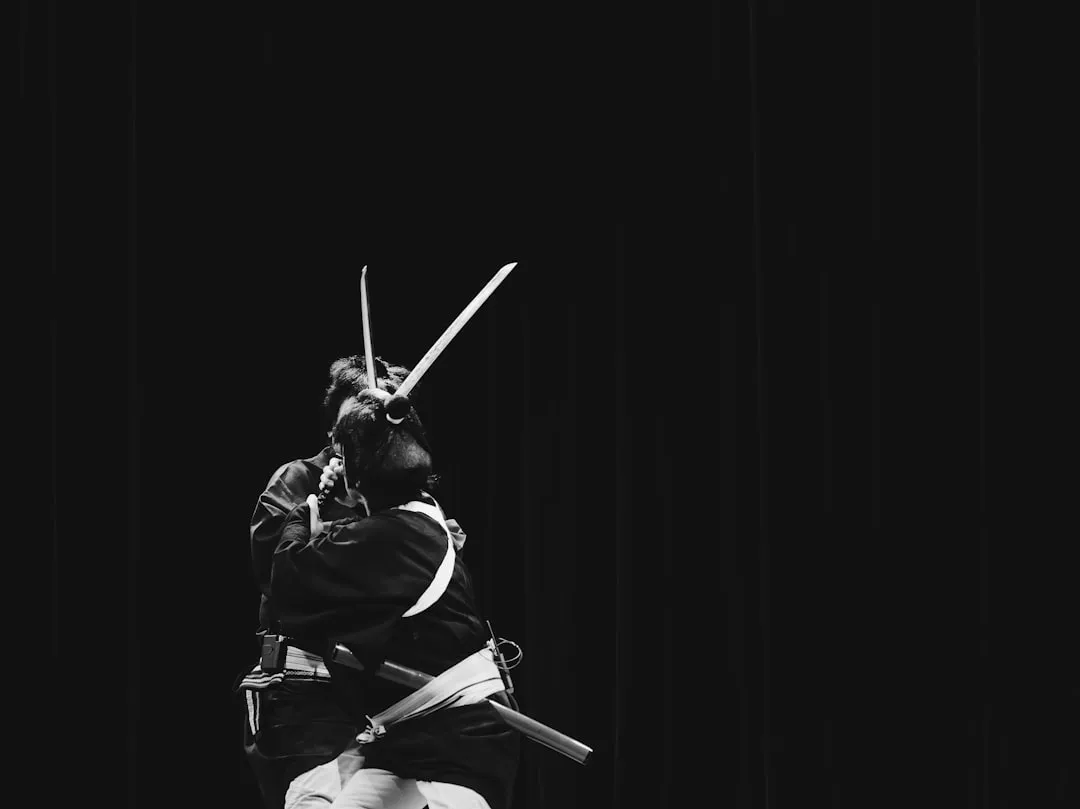
Source: Presence & Path
There’s a level of mental and physical strength that makes you seem invincible. Four hundred years ago, one man achieved it. His name was Miyamoto Musashi, and he wasn’t the strongest physically nor the fastest. But he developed something no one could break — a mind that knew no hesitation, and a body that knew no limits.
Before he died, Musashi wrote it all down in his book, Gorin no Sho — The Book of Five Rings. Within those pages lies the exact map for transforming your mind and body into something that people will look at and think, “How is that possible?”
But there’s a catch. Musashi’s method isn’t about motivation. It’s about elimination. He didn’t build strength by adding things. He built it by removing everything that was getting in the way.
Chapter 1: The Awakening

The story begins with an ordinary man named Lucas — an engineer, 32 years old, married with two kids. A normal guy with a normal life and normal problems. But Lucas had a specific problem: he was weak — not just physically, but mentally too.
His pattern was always the same:
- He woke up every day promising to work out. He bought a gym membership three times. He canceled all three.
- He started a diet on Monday and broke it by Wednesday.
- He promised to wake up early but hit the snooze button seven times.
- When things got tough at work, he’d freeze up.
- When he needed a difficult conversation with his wife, he’d put it off.
- When his children needed discipline and values, he left it to his wife to handle.
Strong intention, weak execution.
Lucas was living on autopilot — reacting, never acting — until the day he had a panic attack in front of his boss. In the middle of an important meeting, his heart raced, his hands sweated, and the room began to spin. He had to leave.
The doctor ran tests. Everything was normal. The diagnosis: stress, anxiety, and lack of mental fitness.
The doctor said something that changed everything:
“Your body is responding to threats that don’t exist because your mind isn’t trained to distinguish real danger from discomfort. You need to train your nervous system.”
Lucas returned home and began researching how to train the mind. That’s when he discovered Miyamoto Musashi. And more specifically, he discovered that Musashi didn’t write a philosophy book — he wrote a manual of warfare applied to life.
Chapter 2: The Principle of Elimination

The first thing Lucas read in The Book of Five Rings seemed contradictory:
“Have no preferences. Do not depend on any particular weapon.”
How do you become strong without having a preference? How do you master something without depending on it? Then came Musashi’s explanation:
Your Strength Cannot Depend on Perfect Conditions
Musashi’s logic was devastating in its clarity:
| If You Can Only… | You Are… |
|---|---|
| Train when you have equipment | Weak |
| Meditate when it is silent | Weak |
| Focus when you are rested | Weak |
“True strength is the ability to perform in any condition.”
Musashi practiced with wooden swords, metal swords, two swords, one sword, no sword at all. He fought day and night, in sun, rain, cold, and heat. Why? Because the enemy doesn’t wait for you to be ready.
Lucas’s Dependencies
Lucas realized he was the opposite:
- He could only be productive at the office.
- He could only work out if he’d slept well.
- He could only eat healthy if his wife prepared the meals.
All his discipline depended on external factors. So he did what Musashi taught: he eliminated dependencies.
The Push-Up Protocol
He started small. No gym, no equipment, no specific schedule — just body and floor. Twenty push-ups every day. Anytime, any place, any conditions.
| Week | Challenge | Response |
|---|---|---|
| 1 | Easy | Completed |
| 2 | Body aching | Completed |
| 3 | Traveling for work | Push-ups in hotel room |
| 4 | Got the flu | 10 instead of 20, but never zero |
“Practice must continue regardless of circumstances.”
This is where he had always given up before. But this time, he remembered: never zero. Five push-ups when exhausted, ten when sick, but never zero.
Chapter 3: Hijoshin — The Still Mind

By day 40, Lucas was doing push-ups automatically. But his mind was still a mess — anxiety about work, worry about money, fear of disappointing his family. He was getting stronger physically, but mentally he was still fragile.
Then he encountered the concept Musashi considered more important than any fighting technique: Hijoshin — the everyday mind, the mind that does not change.
“At the moment of battle, your mind should be exactly the same as your mind when you are drinking tea. No excitement, no fear, just presence.”
How is this possible? How do you stay calm when someone is trying to kill you? Musashi’s answer was brutal in its simplicity:
You Train Your Mind Not to React
You don’t suppress fear. You become someone who doesn’t need to react to fear.
Lucas began testing this. Every time he felt anxiety rising — in traffic, in a difficult meeting, in an argument with his wife — he did one thing: he took a deep breath and observed the sensation without reacting to it.
It sounds simple, but it was torture at first. His body wanted to scream, argue, run away. But he just watched:
- My heart is racing.
- My hands are sweating.
- My jaw is tense.
Just observation. No judgment, no reaction.
The First Victory
The first time it worked was in a meeting where his boss started yelling at him in front of everyone. The old pattern was freezing, sweating, stuttering. This time, Lucas felt the fear coming on, recognized it, and continued speaking normally.
- His voice didn’t shake.
- His hands didn’t sweat.
- He responded clearly.
The boss was confused. The team was shocked. But Lucas knew what had happened: he had accessed Hijoshin for the first time — the mind that doesn’t move.
“When you practice non-reactive observation of difficult emotions, you are literally rewiring your amygdala. Over time, the activation threshold increases. What once triggered panic now triggers only recognition.”
Chapter 4: Seni no Heiho — The Way of the Warrior

But Musashi knew that a calm mind without a capable body is an illusion. You can have perfect emotional control, but if your body can’t handle it, you lose.
“Train hard to strengthen the body. When the body is weak, the mind wavers. When the body is strong, the mind remains firm.”
Lucas had been doing push-ups for 60 days. He had gotten stronger, but he hadn’t yet tested his body under extreme conditions. Musashi didn’t train in comfort — he trained to the limit and then went beyond.
The 100 Push-Up Challenge
Lucas decided to do something that seemed insane: 100 push-ups a day for 30 days. No matter how long it took, no matter how many breaks he needed, he would complete 100 every single day.
| Day | Result |
|---|---|
| 1 | Took 45 minutes |
| 5 | Could barely lift his arms |
| 10 | His wife told him he was overdoing it |
| 15 | 100 push-ups in 20 minutes |
| 30 | 100 push-ups in 12 minutes — without stopping |
What Really Changed
But what changed wasn’t just the body. It was the mind.
When you prove to yourself that you can do something that seemed impossible, you stop negotiating with difficulty. You just do it.
Musashi called this Seni no Heiho — the way of the warrior. It’s not about talent. It’s about eliminating the idea that there’s something you can’t do if you train hard enough.
Chapter 5: Zanshin — Permanent Consciousness
Lucas was physically stronger, mentally calmer. But Musashi had a third principle that separated ordinary warriors from legends: Zanshin — literally translated, the mind that remains.
“The battle does not end when the enemy falls. It ends when you are safe.”
Zanshin is the consciousness that does not relax until everything is truly resolved. Musashi wrote of warriors who won a duel but let their guard down and were attacked while celebrating.
How Lucas Was Living the Opposite
Lucas realized:
- He’d finish a project and immediately relax completely.
- He’d reach a goal and stop training.
- He’d solve one problem and ignore the signs of the next.
Practicing Zanshin in Daily Life
Lucas began integrating Zanshin into small moments:
- After finishing his push-ups, instead of collapsing, he’d stand for 30 seconds breathing mindfully.
- After a difficult meeting, instead of immediately checking his phone, he’d sit for a minute processing what happened.
When you maintain awareness after the action, you integrate the learning. When you immediately tune out, you lose the lessons.
Within 90 days, something had completely changed in Lucas:
- Coworkers: “You seem different. You’re more present, man. You don’t get phased by anything.”
- His wife: “What happened to you? You seem like a different person.”
She was right. He was different.
Chapter 6: Fudoshin — The Mind That Does Not Move

The real test came on day 105. Lucas was called into an emergency meeting. The company was making cuts. He was going to be fired.
The old Lucas would have gone into panic mode — heart racing, mind spiraling, catastrophic scenarios swirling. But something different happened. He felt the initial shock, recognized the sensation, and then nothing. His mind didn’t react. His body didn’t go into fight or flight mode. He was simply present with the information.
“I see. What’s the schedule?"
"You have 30 days. Sorry, Lucas."
"Okay. Thanks for letting me know.”
Lucas left the room, returned to his desk, and continued working. His colleagues who had been laid off alongside him were in a panic — calling home, crying, paralyzed. Lucas was calm.
Not because he didn’t care, but because he had developed something Musashi called Fudoshin — the still mind. The mind that is unshaken by external circumstances.
“The tree is quiet, not because of the absence of wind. It is quiet because its roots are deep.”
Lucas’s roots had grown deep:
- 105 days of flawless training
- 105 days of emotional observation without reaction
- 105 days of continuous awareness
When the storm hit, he didn’t break — because he’d already been tested a thousand times.
Action Over Panic
Over the next 30 days, while everyone else was panicking, Lucas was in action:
- Updated his resume
- Activated his network
- Went on interviews
By day 23, he had three job offers. He chose the best one and left his old company earning 40% more. The colleagues who panicked? Still unemployed three months later.
“The difference between those who perform under pressure and those who collapse isn’t talent. It’s how much time they spent deliberately exposing themselves to discomfort. Resilience isn’t something you have. It’s something you build — repetition by repetition.”
Chapter 7: Hyoho — The Strategy of Emptiness

Musashi had one last principle that was the most difficult to understand and the most powerful to apply: Hyoho — the strategy of emptiness.
“In combat, do not intend to win. Intend not to lose.”
It seems like the same thing, but it is not.
| Fighting to Win | Fighting Not to Lose |
|---|---|
| You push forward aggressively | You remain whole, without gaps |
| You expose yourself | You have no openings |
| You risk too much | You have no weakness |
When you fight to win, you create openings. When you fight not to lose, you remain complete.
Applied to Life
Lucas applied this to his new job. Instead of trying to impress everyone and demonstrate his value immediately, he simply didn’t make mistakes:
- He arrived on time.
- He delivered what he promised.
- He didn’t create drama.
- He didn’t make promises he couldn’t keep.
Three months later, he was promoted. His boss said: “You’re not the brightest on the team, but you’re the most reliable. And reliability trumps brilliance.”
That’s Hyoho. You don’t have to be the best. You have to have no weaknesses.
How Musashi Never Lost
Musashi never lost a duel — not because he was stronger or faster. He never lost because he never gave an opening. He studied his opponent, waited for a mistake, and executed. Absolute efficiency, zero waste.
Lucas applied this to everything:
| Area | Old Approach | New Approach (Hyoho) |
|---|---|---|
| Diet | Try to eat perfectly | Simply never eat junk food |
| Training | Try to break records | Simply never miss a day |
| Relationships | Try to be the perfect husband | Simply never break his word |
No weaknesses. No loopholes. No excuses.
Chapter 8: Sutemi — Letting Go of the Self

Six months after beginning his journey, Lucas was unrecognizable — physically stronger, mentally unbreakable, emotionally stable. But he had one final barrier. He was still afraid — not of external things, but of something internal. Afraid that if he stopped for a day, everything would fall apart. Afraid that all this strength was fragile, temporary.
That’s when he encountered Musashi’s ultimate concept: Sutemi — abandoning the self.
Musashi’s final words: “I regret nothing. I fear nothing. I desire nothing.”
How Do You Completely Abandon Fear?
Musashi’s answer was the most radical: you stop identifying with the outcome.
- You are not your successes.
- You are not your failures.
- You are simply the continuous practice.
Lucas’s Test
Lucas tested this in an extreme way:
- He stopped counting training days.
- He stopped celebrating milestones.
- He stopped posting progress on social media.
- He removed all external validation.
The training continued. The meditation continued. The discipline continued. But now without ego, without the need for recognition, without the fear of losing what had been built.
You can’t lose what you are. You can only lose what you have.
If your strength depends on maintaining a streak, you’ll fear breaking it. If your strength is who you’ve become, nothing can take that away from you.
The Uncomfortable Truth
And it was at that exact moment that something scary happened: people started avoiding Lucas. Not because he was arrogant. Not because he was aggressive. But because his presence was uncomfortable.
When you eliminate fear, hesitation, and the need for validation, you become a mirror. People look at you and see everything they’re not — and that hurts.
- His coworkers stopped complaining around him.
- His friends stopped making jokes about gyms and diets.
- His own family started commenting: “You’re getting too serious.”
Because his existence proved that everything they say is impossible… is just uncomfortable.
Chapter 9: The Complete Transformation

A year after starting, Lucas was no longer Lucas. Not in the sense that he had changed his personality, but in the sense that he had removed everything that was non-essential.
- He was no longer someone who tried to be disciplined. He was someone who couldn’t be undisciplined.
- Practice wasn’t something he did. It was who he was.
Musashi called this Kenzen Ichinyo — the sword and Zen are one. There is no separation between who you are and what you practice.
You don’t meditate. You are meditation.
You don’t train. You are training.
People would ask Lucas, “How do you have so much discipline?” The answer was simple:
“I have no discipline. I’ve eliminated the parts of me that wanted to give up.”
The Integration Principle
This is what Musashi taught: mental and physical strength isn’t about adding things. It’s about removing everything that gets in the way of your essential nature.
- You don’t need to motivate yourself to breathe.
- You don’t need to force your heart to beat.
Why? Because these things are essential to who you are. When training, discipline, and practice become as integrated as breathing, you’ve reached the scary level — the level where people look at you and think, “That’s not human.”
And the truth is: they’re right. It’s not human in the sense of normal human. It’s human in the sense of realized human potential.
Final Thoughts
Miyamoto Musashi died at age 62, alone in a cave, writing. He had no money, no title, no followers. But he had something no one could take away: complete mastery over himself.
His last words: “I regret nothing.”
How many people can say that? How many reach the end and know they lived at the limit of their capabilities? How many have eliminated fear, hesitation, and weakness?
The question is not how did Musashi do it. The question is: why aren’t you doing it?
- You have access to the same knowledge.
- You have the same number of hours in the day.
- You have the same human body with the same potential.
The difference isn’t ability. It’s willingness to do what’s necessary:
- Willingness to eliminate dependencies.
- Willingness to practice until practice becomes identity.
- Willingness to abandon everything that isn’t essential.
This daunting level of mental and physical strength isn’t for everyone — not because it’s impossible, but because it’s uncomfortable. And most people choose comfort over capability.
Strength that scares others is the only strength worth having.