The DEADLY Level of Discipline
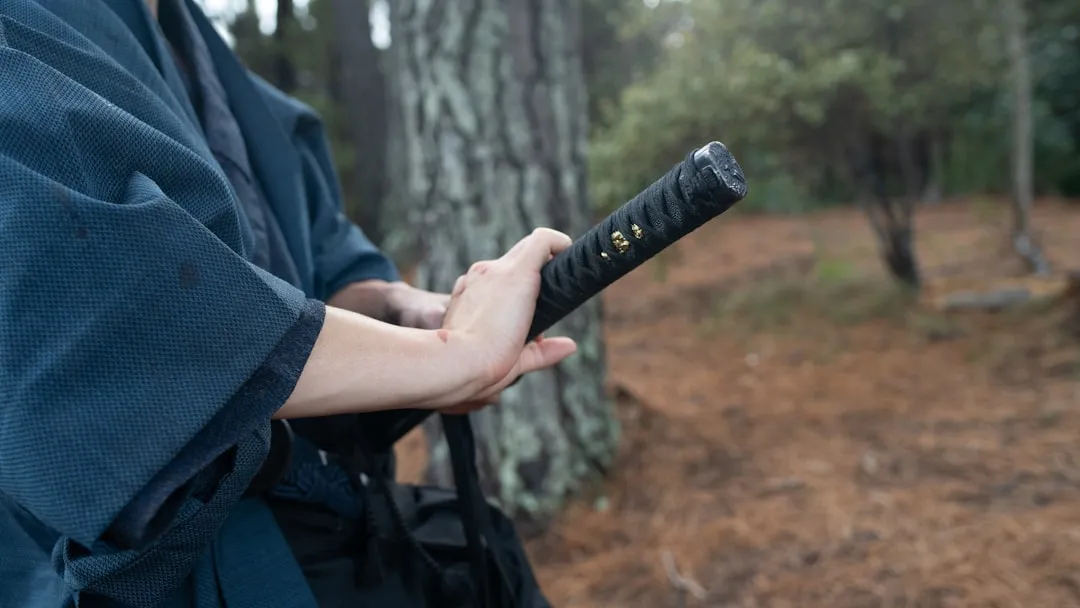
Source: Presence & Purpose
There is a level of discipline that makes people look at you with fear. Not because you are aggressive. Not because you are loud about what you do. Because you have become someone who simply does not stop.
You have met someone like this. Maybe once, maybe never. They wake up the same way every day. They do not negotiate with themselves in the morning. They do not have conversations about whether today is a good day for it. They simply move. The same direction. Every day. Without visible effort. And without visible struggle.
And people around them say the same thing: That is not normal.
They are right. It is not normal.
Normal discipline runs on willpower. And willpower runs out. By Wednesday, by week three, by the first time something goes wrong.
Miyamoto Musashi did not run on willpower. He built something underneath willpower. A system that made discipline not a daily decision, but a daily identity. Not something he chose every morning. Something he had become.
He went 60 years without losing a duel. Not because he was the most talented. Because he had built a quality of discipline that most of his opponents had never encountered and could not understand.
Seven principles. Each one targeting a specific place where most people’s discipline collapses.
Chapter 1: Reigi — Discipline as Respect for Yourself

The commitment that needs no audience.
Reigi means respect, proper conduct. In Japanese martial tradition, it governs every interaction — how you bow, how you enter a dojo, how you treat your equipment. Musashi applied it differently from everyone around him.
Most warriors practiced Reigi as performance. The bow before the match. The correct posture in front of the master. The visible conduct that demonstrated respect to others. Musashi understood Reigi as something private. He maintained the same discipline whether anyone was watching or not. The same training session in the cave alone as in front of the master. The same quality of attention on a day with no duel scheduled as on the day before one.
One of his students noted that Musashi cleaned his weapons with the same care when no one was present as when he was being observed. When asked why, Musashi’s answer was direct:
“The weapons do not know if anyone is watching. Neither do I.”
This is the first principle because it is the foundation of everything else. Most people’s discipline is social discipline. It functions in front of others and collapses in private. They train consistently when someone is tracking them and inconsistently when no one is. They maintain the behavior when it is visible and negotiate with themselves when it is not.
This is not discipline. It is performance.
Reigi, as Musashi practiced it, is the specific commitment to maintain the same standard in private as in public. Not because someone might see — because the standard is the standard regardless of the audience. The warrior who practices Reigi does not need external accountability. They are accountable to themselves with the same seriousness they would be accountable to a master.
The Practice
Identify one practice in your life that you maintain consistently in public and inconsistently in private. For one week, treat the private version with identical seriousness to the public one. Not because anyone will know — because the standard is the standard.
Chapter 2: Fudochi — The Mind That Does Not Move

Discipline that does not respond to internal negotiation.
Fudochi means immovable wisdom. The mind that is not disturbed by the noise around it or the noise inside it. Musashi wrote about this in relation to combat: the warrior whose mind moves toward fear or away from danger has already lost the initiative. The movement of the mind toward any internal state gives the opponent an opening.
He applied this directly to discipline. Every person who attempts consistent practice encounters the same opponent — not external obstacles, but internal negotiation. The voice that arrives at 5:00 in the morning with reasons: You are tired. One day will not matter. The conditions are not ideal. You will do twice as much tomorrow. You deserve rest. You have been consistent for two weeks — one day off will not hurt.
The voice is sophisticated. It knows you. It knows which arguments have worked before. It knows your specific weaknesses and addresses them directly. It is not a generic voice. It is your voice, using your own logic, speaking from inside your own experience.
This is why fighting it does not work. You cannot out-argue yourself. The part of you that wants to stop knows everything the part of you that wants to continue knows. The argument is perfectly matched. And in a perfectly matched argument, the side that requires less energy wins. And stopping always requires less energy than continuing.
Musashi did not fight this voice. He did not argue with it. He did not try to silence it through motivational statements or reminders of his goals. He simply did not respond to it.
Not suppression. Non-engagement.
The mind that has been trained in Fudochi observes the internal negotiation the way it observes a cloud passing — notices it, does not follow it, returns to the movement.
He demonstrated this to a student who complained that his mind kept producing reasons to stop training. “The reasons are always there,” Musashi said. “They will be there tomorrow and next year and in ten years. The question is not whether the reasons are present — it is whether you are moving.”
The student asked how to stop the reasons from coming.
“You do not stop them,” Musashi said. “You stop responding to them. There is a difference. The reasons that receive no response eventually become background, like rain on a roof. Present. Not relevant.”
The Practice
Tomorrow morning, before your first important practice or task, notice the internal negotiation when it arrives. Do not argue with it. Do not try to silence it. Do not respond to it. Just move. The practice begins before the negotiation ends. It will always end before you finish.
Chapter 3: Ichigo Ichie — Each Practice Is the Only One
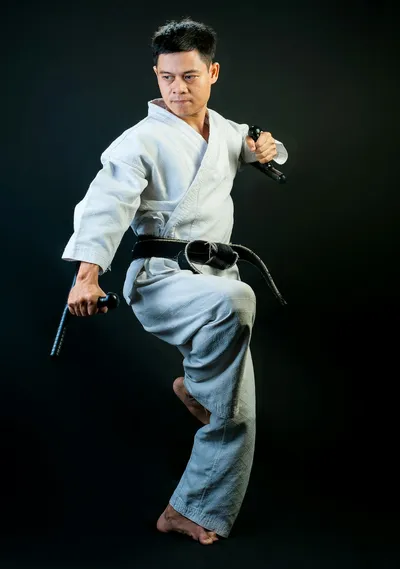
The session that cannot be recovered.
Ichigo Ichie means one time, one meeting. It is most associated with the tea ceremony — the understanding that this gathering, this moment, will never occur again in exactly this form. Musashi applied it to every training session. He treated each practice as unrepeatable. Not as one of many. Not as today’s installment in a long series. As the only one.
This sounds like pressure. It is actually the opposite.
When you treat a session as one of many, it becomes negotiable. You can make up for it later. You can do less today and more tomorrow. The individual session has no weight because the series absorbs it. And the thing that can be made up for later is always being made up for later — not today. Always later.
When you treat a session as unrepeatable, the negotiation collapses entirely. There is no later to make up for it in. There is only this.
Musashi trained in this specific way across decades. He was observed to bring the same complete attention to a solo training session in the mountains that he brought to preparation before a significant duel. There was no scaling based on perceived importance. No “this one matters and this one does not.” Every one mattered in the same way because every one was the only one.
A student asked him once whether it ever became easier to maintain this quality of attention across years of practice. Musashi thought for a moment. “It becomes different,” he said. “Not easier. The attention is not effort after long enough. It is simply what practice is. You stop experiencing it as something you are adding to the session. It becomes the session itself.”
The student asked how long that took.
“Long enough that you stop counting,” Musashi said. “That is how you know.”
The Practice
Before your next practice session, spend 30 seconds with one thought: This session will not come again. What I bring to it is what it will be. Not as pressure — as an orientation. The session that is treated as unrepeatable receives a different quality of attention than the session that is one of many.
Chapter 4: Sutemi — Complete Commitment Without a Reserve

The discipline that keeps no escape route.
Sutemi means throwing away the body. Complete commitment to the action with no part of you held in reserve. No backup plan. No half engagement that allows retreat without cost. Musashi wrote about this in the context of combat: the warrior who keeps a reserve, who holds something back in case the commitment goes wrong, has already weakened the commitment. The opponent feels the reserve. It is visible in the quality of the engagement.
He applied this to how he structured his practice commitments. Most people make commitments with an implicit escape route built in. They will do this habit unless they are tired. They will maintain this practice unless something comes up. They will continue unless the results are not appearing quickly enough.
The unless is the escape route. And the part of the mind that knows the escape route exists is the part that looks for reasons to use it.
Musashi structured his commitments without the unless. Not recklessly — deliberately. He chose what he would commit to carefully, and once chosen, the commitment had no unless attached to it. This changes how the mind relates to the commitment entirely. When there is no escape route, the mind stops looking for one. The energy that was spent evaluating whether today qualifies as an exception redirects toward the practice itself.
A senior student once told Musashi that he had stopped his morning training during a period of illness and had not returned to it since. The illness had passed, but the practice had not resumed. Musashi looked at him. “You left the escape route open,” he said. “The illness used it, and after the illness, the habit of looking for the route remained.” He paused. “The practice should have continued during the illness. Differently, perhaps — slower, shorter — but it should have continued. The continuation is what keeps the route closed.”
The Practice
Identify one commitment you are currently maintaining with an implicit unless. Write down what the unless is. Name it clearly. Then decide: is this a commitment or a preference? Commitments have no unless. Preferences do. If it is a commitment, close the escape route. Define specifically what continuation looks like on the days the unless would normally apply.
Chapter 5: Jizoku — Continuity as Identity

You are not someone who practices. You are the practice.
Jizoku means continuity — sustained persistence. Not the effort of continuing. The state of being someone for whom continuation is simply what happens. This is the principle Musashi understood most deeply and most people never reach.
There are two ways to relate to a practice. The first is as something you do. You are a person who meditates, who trains, who studies. The practice is an activity, an action, something you perform and then stop performing. It exists separately from you. You pick it up and put it down.
The second is as something you are. The practice is not what you do. It is part of what you are. The meditator does not decide to meditate. The warrior does not decide to train. These things happen because of what they are, not because of what they choose in the moment.
Most people live in the first relationship their entire lives. They are always picking up and putting down, always starting again, always fighting the same resistance at the beginning of every session because the session is always beginning fresh — always separate from who they are.
Musashi moved from the first to the second sometime in his 30s. The shift is visible in the accounts of people who knew him. They describe him not as someone who practiced constantly, but as someone for whom the practice and the person had become indistinguishable. He did not train every day because he had strong willpower. He trained every day because he was someone who trained every day. The same way you do not decide each morning whether to speak your native language. It is not a decision. It is what you are.
The path from doing to being is not dramatic. It is not a single moment of commitment. It is the accumulation of enough repetitions that the practice stops requiring a decision. The repetitions do not have to be perfect. They have to happen.
Musashi missed training sessions across his life. He traveled. He fought. He was wounded, he was ill. What he never did was define himself as someone who had stopped. The session was missed — he was still a warrior who trained. The next session happened because that is what warriors who train do. The identity was never suspended. The practice returned to the identity the way a river returns to its channel after a flood.
The Practice
Write one sentence. Not what you do. What you are. Not “I meditate every morning.” I am someone who meditates. Read it each morning before the session. Not as motivation — as a reminder of what you already are.
The practice that follows from identity is more durable than the practice that follows from intention. Intention can be overridden. Identity requires becoming a different person to override. And that is a much higher barrier.
Chapter 6: Zanshin — The Attention That Does Not Relax
Discipline that continues after the session ends.
Zanshin means remaining mind — the awareness that persists after a technique is complete. In martial arts, the strike lands but the attention does not withdraw. It stays present with what followed. Musashi applied this to how he treated the time between practice sessions.
Most people think of discipline as what happens during the session — the training, the study, the practice itself. The time between sessions is simply waiting time, recovery, not part of the discipline. Musashi understood the time between sessions as equally important. What you do in the hours after a session determines how the next session begins. What you consume, how you sleep, what you allow into your attention, whether you review what the session produced or simply move on.
He was observed to spend time after every significant training session in a specific kind of quiet. Not reviewing technique mechanically. Sitting with what the session had shown him — what had worked and why, what had not worked and what that revealed. This was not analysis. It was the specific quality of continued attention that allows what the session produced to settle rather than dissipate.
The student who closes the book and immediately fills the space with something else loses most of what the session produced — not the facts, the understanding. The understanding requires time to settle. The Zanshin after the session is the time when settling happens.
This applies to physical training as equally as to study. The warrior who trains hard and then fills the recovery hours with noise and distraction loses something that the training created. The body needs the Zanshin after the session as much as the session itself.
The Practice
After every significant practice session, protect 20 minutes. No new input, no screen, no conversation. If possible, just the space for what the session produced to settle. This is not rest — it is the continuation of the session in a different form. The Zanshin that determines how much of the session actually stays.
Chapter 7: Kakugo no Michi — The Path of Absolute Readiness
The discipline that has already decided.
Kakugo means readiness — absolute preparedness. The state of someone who has already made every decision that matters before the moment arrives. Michi means path — the way of living. Kakugo no Michi is not a documented historical term. It is the principle we see running through everything Musashi wrote and everything recorded about how he lived. The named principle that was always present but never named.
It is this: the person with ordinary discipline makes decisions in the moment. Each morning they decide whether to practice. Each time an obstacle arrives, they decide whether to continue. Each time conditions are not ideal, they decide whether today is an exception. Every decision is an opportunity for the escape route to be found.
The person who has walked Kakugo no Michi has already made every decision. Not in the moment — in advance, completely, irrevocably. The decision to practice was made once, not every morning. Once. All future mornings are simply the execution of a decision already made. The decision about what happens when conditions are not ideal was made once. When sick, continue at reduced intensity. When traveling, continue with available conditions. When something goes wrong, continue. The decision was made. The moment arrives and finds the answer already waiting.
This is what Musashi had built by his 40s. He was not deciding each morning whether to train. He had decided. The mornings were simply the execution of a standing decision. He was not evaluating each obstacle to determine whether it qualified as an exception. He had pre-decided. The obstacles met pre-existing answers.
This is what his contemporaries could not understand about his consistency. They were watching someone execute decisions already made and interpreting it as extraordinary willpower. It was not willpower. It was architecture. The architecture of a life where the important decisions had already been made and the moments of potential weakness found no open question to inhabit.
The Practice
Write down the three most common situations that have broken your discipline in the past. For each one, write the pre-decided response. Specifically — not a principle, a specific action. When I am sick, I do X. When I am tired, I do Y. When I do not feel like it, I do Z.
These are not rules. They are decisions already made. When the situation arrives, there is no decision to make. There is only execution. This is Kakugo no Michi — the path of the decision already made.
What This Discipline Actually Produces
Years later, Musashi is in his cave on Mount Iwato. He has been there for two years — writing, training, alone. No audience, no students, no duels scheduled, no one watching. The practice continues identically to how it continued when there were students, when there were duels, when there was an audience. Not because he is forcing it — because he is someone for whom it continues. The discipline and the person are no longer separate things.
This is what the seven principles produce when they are built together over time:
| Principle | What It Removes |
|---|---|
| Reigi | The need for an audience |
| Fudochi | Internal negotiation |
| Ichigo Ichie | The illusion of “later” |
| Sutemi | Escape routes |
| Jizoku | The gap between identity and action |
| Zanshin | The dissipation of progress |
| Kakugo no Michi | Decision fatigue in the moment |
Together, these seven principles produce something that willpower alone cannot produce. Not a person who tries hard — a person who has become. The trying is gone. What remains is the being.
And this is what frightens people about someone who has reached this level. Not the intensity, not the effort — the absence of struggle. The ease with which they do what others cannot begin. The fact that what costs others everything costs them nothing visible.
They are not stronger than you. They did not receive a gift you were not given. They built something different — an architecture underneath willpower. Seven layers, each one removing a point where discipline can fail. By the time all seven are built, there are no failure points left.
That is the level that makes people uncomfortable. That is what they mean when they say that is not normal. They are right. It is not normal.
Normal people build discipline on top of willpower. This system builds discipline underneath it. This system is available to you. Not in 60 years. Starting with one principle — the one that most directly addresses where your discipline currently breaks. Start there. Build that layer first, then the next. The architecture takes time. Each layer makes the next one easier to build.
Musashi spent 60 years building his. You do not have 60 years, but you have today. That is enough to begin.
Miyamoto Musashi died in 1645. He had spent 60 years building a discipline that his contemporaries described with one consistent word: frightening. Not because he was harsh or extreme — because he was consistent in a way that made ordinary inconsistency visible. His presence made the gap between what people intended and what they did impossible to ignore.
That is what genuine discipline does. It is not a judgment. It is a mirror.
Seven principles. Not a system to follow — an architecture to build. Start with one. The one that reveals most clearly where your current discipline has its escape route. Close that route. Everything else follows.